
📊 Full opportunity report: Best Low-Noise PC Cases for Airflow and Sound Dampening on ThorstenMeyerAI.com — validation score, market gap, and execution plan.

Get the latest gadgets delivered free — and shop member deals
- Fast, free delivery on millions of items
- Access to Prime Big Deal Days deals on October 6–7
- Prime Video, Amazon Music and more included
TL;DR
This guide reviews the best PC cases in 2026 that optimize airflow and sound dampening. It highlights how high-power workloads influence case choice, emphasizing mesh versus silent designs.
In 2026, the top PC cases for balancing airflow and sound dampening are identified, with a focus on how high-power workloads influence case selection. Experts emphasize that for sustained high loads, mesh cases with large fans often outperform sealed silent cases in both cooling and noise levels, challenging traditional assumptions.
Recent analyses reveal that for high-performance AI workstations running continuous workloads, cases with open mesh fronts and large, slow-spinning fans tend to provide better thermal management and quieter operation than sealed, foam-lined silent cases, which trap heat and require fans to spin faster, increasing noise.
Key recommendations include the Fractal Design North and Meshify 3 for general workstation use, the Fractal Design Torrent for maximum airflow, and the be quiet! Dark Base 802 for sound dampening. These choices are based on their ventilation design, fan size, and component clearance, tailored for sustained high loads.
Best low-noise PC cases
for airflow & dampening.
Sound dampening and airflow pull in opposite directions — and for a sustained AI load, the choice lands somewhere most people don’t expect. Flip the toggle in Part 2 to see why a sealed “silent” case can end up louder than an open one.
Why Mesh Cases Outperform Silent Designs Under Continuous Load
Understanding the tradeoff between airflow and noise is critical for high-power workstations. Mesh cases with large fans allow heat to escape efficiently, reducing component temperatures and fan noise, which is essential for maintaining performance and longevity during prolonged workloads. This insight challenges the conventional preference for silent cases in all scenarios, highlighting the importance of workload-specific case selection.
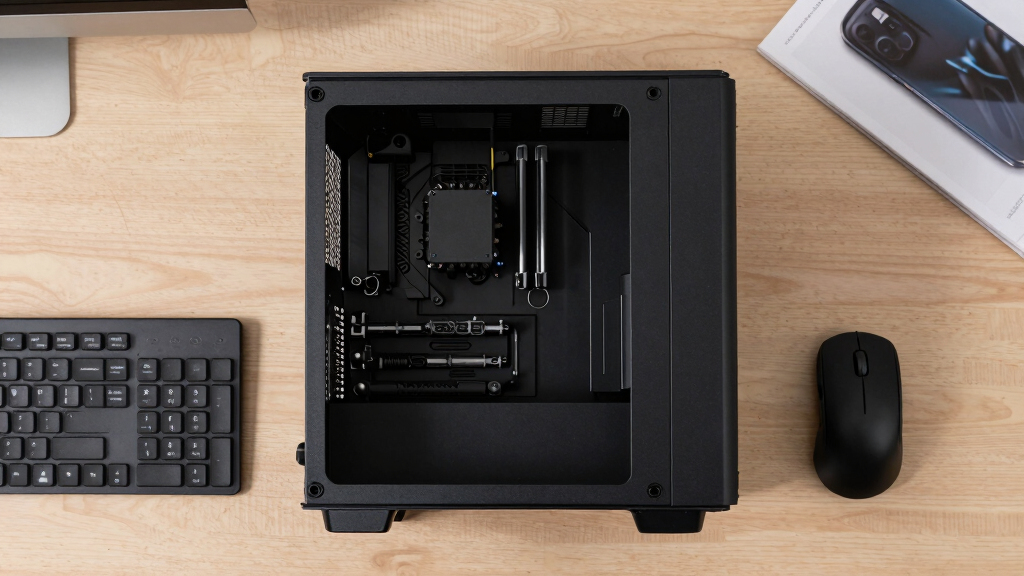
low noise PC case with good airflow
As an affiliate, we earn on qualifying purchases.
As an affiliate, we earn on qualifying purchases.
Impact of Workload Type on Case Choice in 2026
Historically, silent cases with foam-lined panels were favored for quiet operation. However, recent developments show that high-power AI workloads generate continuous heat, making open mesh designs more effective in maintaining thermal stability and reducing noise by preventing heat buildup. This shift is supported by expert opinions and recent case performance tests.
"For sustained high loads, mesh cases with large fans often run quieter and cooler than sealed silent cases, because they don't trap heat and force fans to work harder."
— Thorsten Meyer, tech reviewer
mesh PC case for high-performance workloads
As an affiliate, we earn on qualifying purchases.
As an affiliate, we earn on qualifying purchases.
Remaining Questions About Case Performance in Different Environments
While data favors mesh cases for high-power workloads, it remains unclear how specific environmental factors—such as dust levels, room temperature, and user preferences—impact long-term performance and noise levels. Additionally, the optimal balance between sound dampening and airflow for mixed-use scenarios needs further investigation.
silent PC case with sound dampening
As an affiliate, we earn on qualifying purchases.
As an affiliate, we earn on qualifying purchases.
Future Developments in PC Case Design for High-Power Workloads
Manufacturers are likely to develop hybrid cases that better balance airflow and sound dampening, possibly incorporating adaptive materials or active cooling features. Further testing under varied conditions will refine recommendations, and new case models tailored for AI and other demanding workloads are expected to hit the market in 2026 and beyond.
As an affiliate, we earn on qualifying purchases.
Key Questions
Are mesh cases always better for high-power workloads?
Generally, yes. Mesh cases with large fans tend to offer better cooling and quieter operation under sustained loads, but individual needs and environmental factors may influence the best choice.
Can I get both quiet and cool in a single case?
Achieving both is challenging; hybrid cases with soundproof panels and high airflow features are available, but they often involve compromises. Proper fan setup and placement are also crucial.
How important is fan size in case selection?
Large fans (140mm or 180mm) move more air at lower RPMs, reducing noise and improving cooling efficiency, making them highly desirable for high-performance builds.
Will future cases eliminate the airflow-silence tradeoff?
Advances in materials and cooling technology may reduce this tradeoff, but currently, a balance must be struck based on workload and environment.
Source: ThorstenMeyerAI.com
Fall Picks
fall essentials
As an affiliate, we earn on qualifying purchases.