
TL;DR

Get the latest gadgets delivered free — and shop member deals
- Fast, free delivery on millions of items
- Access to Prime Big Deal Days deals on October 6–7
- Prime Video, Amazon Music and more included
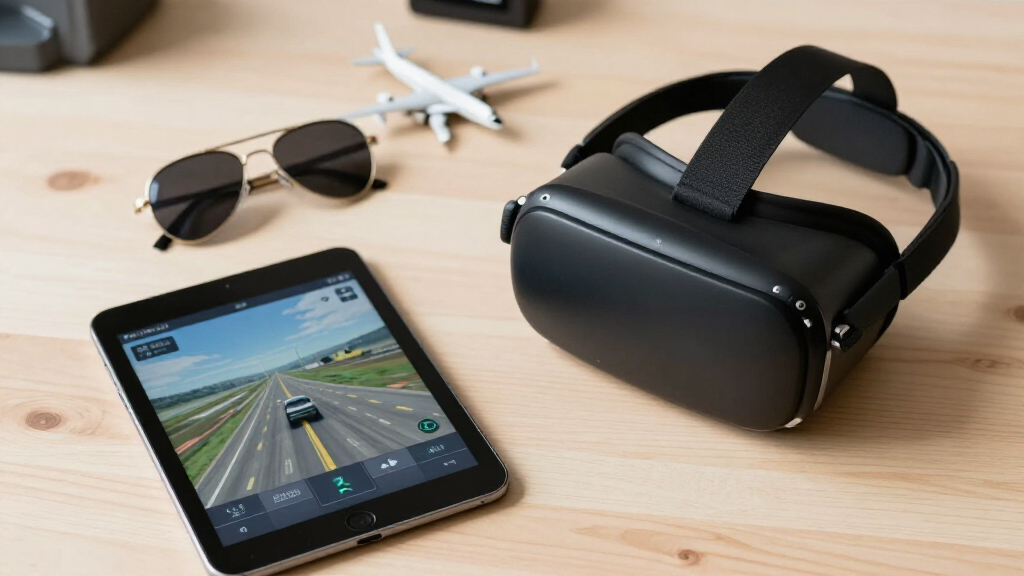
Virtual reality technology is being adopted in pilot training to enhance realism and safety. This development aims to supplement traditional methods and improve readiness for future pilots.
Virtual reality (VR) is increasingly being integrated into pilot training programs, offering immersive simulations that aim to enhance pilot preparedness and safety. This development is part of a broader effort to modernize aviation education and reduce training costs.
Several aviation training institutions and aerospace companies are adopting VR technology to simulate cockpit environments, emergency scenarios, and complex flight operations. These VR systems provide realistic, risk-free environments for pilots-in-training, allowing them to practice procedures and decision-making skills in a controlled setting. According to industry sources, the use of VR in pilot training has shown promising results in improving skill acquisition and confidence.
While traditional flight simulators remain a core component, VR offers a more flexible and cost-effective supplement, enabling more frequent and varied training sessions. Some programs are also exploring the integration of augmented reality (AR) to enhance real-world training scenarios. Experts note that VR can help address pilot shortages by providing scalable, accessible training options, especially during times when physical simulators are limited or unavailable.
However, the extent of VR’s effectiveness compared to conventional methods is still under evaluation, with ongoing studies assessing its impact on long-term skill retention and real-world performance.
Impact of VR on Pilot Training Effectiveness
The adoption of VR in pilot training could significantly improve safety and efficiency in aviation by providing more comprehensive and accessible training options. It offers a way to simulate rare or dangerous scenarios without risk to personnel or equipment, potentially reducing accident rates. Additionally, VR may help address pilot shortages by enabling more flexible and scalable training programs, especially in regions with limited access to traditional simulators.
This shift toward immersive technology reflects a broader trend in aviation toward digital transformation, which could influence regulatory standards and industry practices in the coming years.
As an affiliate, we earn on qualifying purchases.
Recent Advances in Aviation Training Technologies
Over the past decade, aviation training has increasingly incorporated digital tools, including high-fidelity simulators and computer-based instruction. The COVID-19 pandemic accelerated interest in remote and virtual training solutions, pushing institutions to explore VR and AR applications. Several industry leaders and research institutions have announced pilot programs testing VR modules within existing curricula, citing benefits such as reduced costs and enhanced engagement.
While VR has been used in gaming and military training for years, its integration into civilian pilot education is still emerging, with ongoing evaluations to validate its effectiveness and safety standards. Regulatory bodies like the FAA are observing these developments, considering updates to certification requirements for VR-based training modules.
“VR offers a safe, cost-effective way to simulate complex scenarios that are difficult to replicate in traditional training.”
— an anonymous researcher
As an affiliate, we earn on qualifying purchases.
Uncertainties in VR Training Effectiveness and Regulation
It is not yet clear how VR-based training compares long-term to traditional methods in terms of skill retention and real-world performance. Regulatory agencies are still evaluating how to incorporate VR modules into certification standards, and there are ongoing discussions about safety and efficacy benchmarks.
As an affiliate, we earn on qualifying purchases.
Next Steps in VR Pilot Training Adoption and Evaluation
Further research and pilot programs are expected to determine the effectiveness of VR in pilot training. Industry stakeholders anticipate potential updates to regulatory guidelines within the next 1-2 years, alongside broader adoption by training institutions. Ongoing technological improvements and cost reductions could accelerate integration into standard curricula.
As an affiliate, we earn on qualifying purchases.
Key Questions
How does VR training compare to traditional flight simulators?
VR offers a more flexible and cost-effective supplement to traditional simulators, providing immersive experiences that can enhance training but are still being evaluated for long-term effectiveness.
Are regulatory agencies approving VR as an official part of pilot training?
Regulatory bodies like the FAA are currently observing and assessing VR training programs, with some pilot projects under review and no formal certification standards yet established.
What are the main benefits of using VR in pilot training?
VR provides realistic, risk-free simulation environments, allows for scalable and accessible training, and can reduce costs associated with traditional methods.
When might VR become a standard component of pilot certification?
It is uncertain, but industry experts expect regulatory updates and wider adoption within the next 1-2 years as more data on effectiveness becomes available.
What challenges remain for VR in aviation training?
Key challenges include validating long-term training outcomes, establishing safety standards, and integrating VR modules into existing certification frameworks.
Source: rss
Fall Picks
fall essentials
As an affiliate, we earn on qualifying purchases.