

There is a particular genre of construction software announcement that promises to fix paperwork and delivers a login screen. Gewerkton is trying something with a little more nerve. The voice-first construction documentation and defect management platform has entered beta, with a public beta planned for fall 2026 — and it arrives with a spec sheet that reads less like a startup pitch and more like a list of the industry’s oldest grievances: talking instead of typing, evidence instead of recollection, and commercial plumbing deep enough for the German market and broad enough for everyone else.
Construction Tech · Beta Briefing
Voice in, evidence out
Gewerkton enters beta ahead of a public beta planned for fall 2026 — a voice-first documentation and defect-management platform built by a solo founder directing a fleet of coding agents. Its seven-word thesis: “On site, what counts is what’s proven.”
3
Product lines, one brand
Field — voice-first site app: dictation to evidence, defects, daywork reports, takt, portal. Studio — browser workspace for plans and models; where no model exists, the site team creates one. Cloud — operations and model/data coordination with third parties.
21 packages / one night
Built by one person + agents
A solo founder directs a fleet of coding agents — Codex and Claude. The night’s 21 packages were verified with negative controls and mutation tests: the verification you run when output will be audited, not applauded.
13 AI providers
Bring your own AI, pick your region
Customers bring their own keys and choose where the AI runs: EU, US, or Asia — including mainland China. No vendor lock-in at the AI layer. Data residency is a choice, not a preset: EU cloud or the customer’s own infrastructure.
27 content languages
German backbone, global interface
The interface speaks the language of the crew holding the phone. Underneath, the German commercial core is integrated deeply, not bolted on: GAEB · REB · XRechnung · DATEV.
Now — Beta
All three product lines live; the integrations, languages and AI layer are presented as current capabilities, not roadmap. Named customers so far: zero — reference stories come after the public beta, not before.
Fall 2026 — Public beta
The date that actually matters for buyers: the broader market tests reliability across hundreds of crews against real deadlines and real disputes.
First proving grounds: wind farms & renewables·data centers & industrial plants·housing & building·infrastructure & tunnels·cross-border & Asian projects
A claim you can audit from your browser: the marketing site itself runs in 27 languages with zero trackers, no cookie banner and a fully egress-free architecture — plus a media bank of 51+ self-produced clips and posters.
Source: own reporting · gewerkton.com
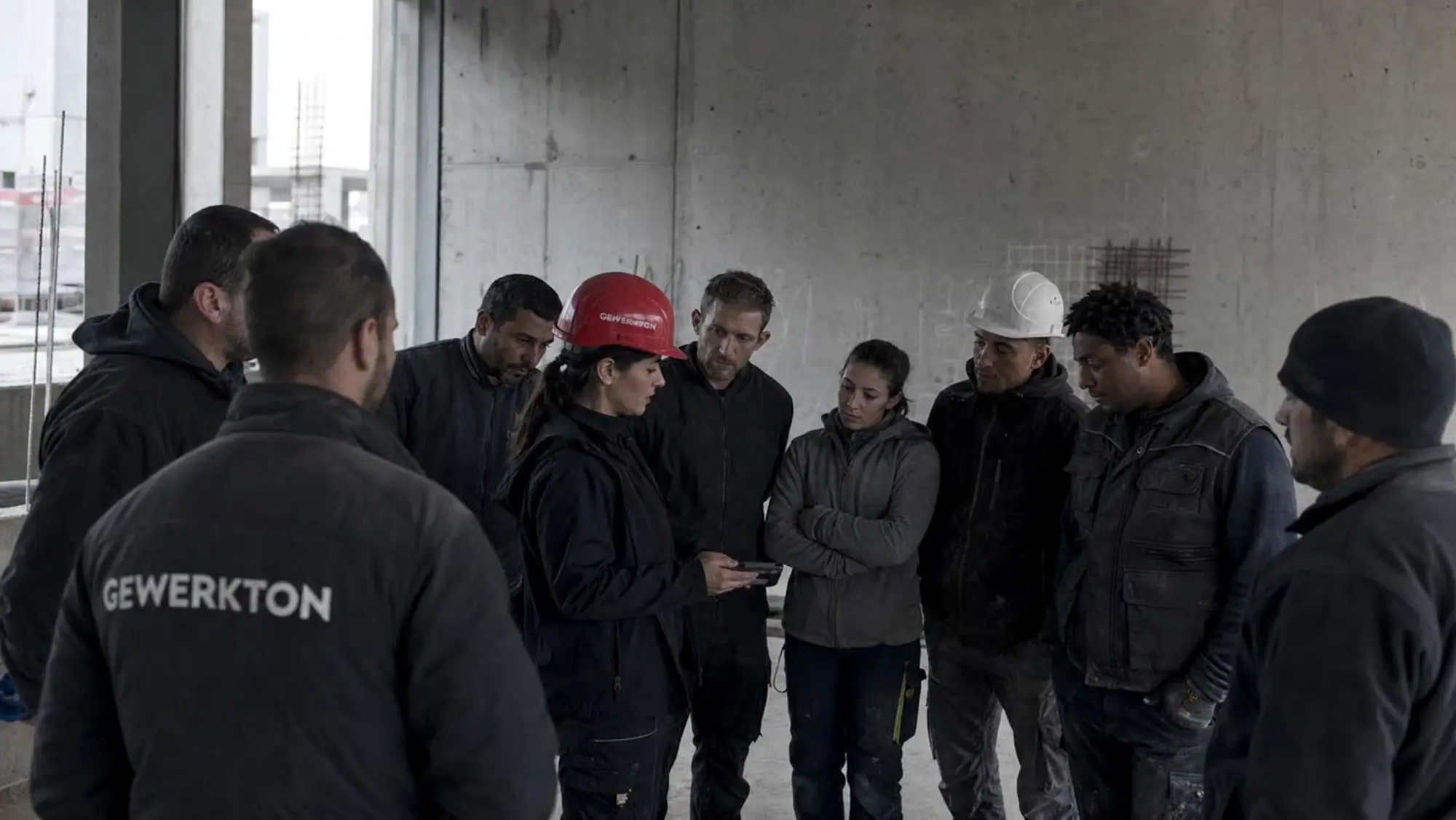
The core idea is that the most reliable keyboard on a construction site is the human voice. Site teams dictate; the platform turns that dictation into evidence — defects, daywork reports, instructions — in a system of record designed for people wearing gloves, standing in dead zones, and answering to three deadlines at once. The company’s marketing line states the thesis in seven words: “On site, what counts is what’s proven.” Everything in the product, from offline capture to original-audio backups, hangs off that sentence.
The bet behind voice-first is not novelty; it is friction. Documentation fails on sites because it competes with the actual work, and typing into a form loses that competition every time. Dictation flips the economics: the record is created while the memory is fresh, on the move, in the crew’s own language. Gewerkton is hardly the first to try this, but pairing voice capture with evidence-grade structure — and the commercial backbone to make the output billable — is a less crowded corner.
One brand, three product lines
Gewerkton is a branded house: one brand, three product lines, each mapped to a distinct part of the documentation and defect management problem. Gewerkton Field is the voice-first construction site app — dictation to evidence, defects, daywork reports, takt, and a portal. Gewerkton Studio is the browser workspace for plans and models, with a notable twist: where no model exists, the site team creates one in the browser. Gewerkton Cloud handles operations and the coordination of models and data between Field, Studio, and third parties.
That split tracks how projects actually run. The person walking the floor talks into Field; defects and daywork reports land as structured records rather than evening homework. The planner works in Studio, and if the project has no model — a common situation outside flagship builds — the site team creates one in the browser instead of waiting. Cloud keeps both sides consistent and coordinates with third parties. It is a sensible division of labor, and it quietly removes the most common excuse for skipping model-based documentation: that the model never existed in the first place.
voice-activated construction documentation tablet
As an affiliate, we earn on qualifying purchases.
As an affiliate, we earn on qualifying purchases.
Built by one person and a fleet of agents
The build story is where Gewerkton gets genuinely unusual. The platform is built by a solo founder directing a fleet of coding agents — Codex and Claude, working under human direction. In one night, according to the company, the fleet shipped 21 software packages, verified with negative controls and mutation tests. Those two details matter: negative controls and mutation testing are the verification you run when you expect the output to be audited, not applauded. It suggests the founder knows exactly how skeptical the construction industry is of anything new.
Whether a one-person operation can support software that job sites come to depend on is a legitimate open question — and it is exactly the kind of question a beta period exists to answer. As a signal of where development throughput is heading, though, a night that produces 21 verified packages is a data point the whole software industry, not just construction tech, will want to watch. If nothing else, it reframes what a small team can ship.


Artificial Intelligence in Construction Engineering and Management
As an affiliate, we earn on qualifying purchases.
As an affiliate, we earn on qualifying purchases.
Bring your own AI, pick your own region
The AI architecture follows a bring-your-own model. Thirteen AI providers are supported; customers bring their own keys and choose the region their AI runs in — the EU, the US, or Asia, including mainland China. There is deliberately no vendor lock-in at the AI layer. On construction projects, that matters twice: once for procurement teams allergic to dependency, and once for clients whose data-residency rules change by country, by project, and occasionally by trade. Data residency itself is a choice rather than a preset: Gewerkton runs in an EU cloud or on the customer’s own infrastructure.
The German commercial backbone is the other half of the foundation. GAEB handles the structured exchange of tender and billing data in German construction; REB covers the settlement rules; XRechnung is the German e-invoicing standard; DATEV is the accounting ecosystem nearly every German contractor’s tax adviser lives in. Integrating all four deeply, rather than bolting them on, is what “born in the German market” means in practice. Layer 27 content languages on top, and the export ambitions are obvious.
Global ambition is not a bolt-on here. Twenty-seven content languages put the interface in the language of the crew actually holding the phone, and the regional AI-provider choice means a project in Seoul and a project in Stuttgart can run the same platform with different providers underneath. For an industry where a single joint venture might span three continents, that is less a feature than table stakes — and it is notable how few incumbents treat it that way.
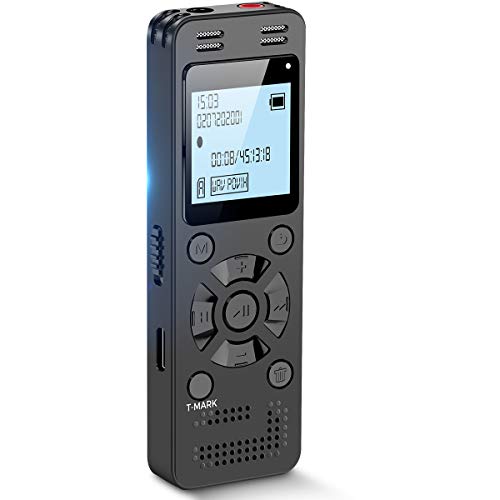
128GB Digital Voice Recorder for Lectures Meetings – EVIDA 9296 Hours Voice Activated Recording Device Audio Recorder with Playback,Password
Clear PCM Recording: Adopts upgraded noise cancelling microphone with professional recording chip. Capture 1536Kbps premium quality sound. Voice…
As an affiliate, we earn on qualifying purchases.
As an affiliate, we earn on qualifying purchases.
Who it is built for
The deployment list reads like a map of where documentation and defect management hurts most, and it is worth going through segment by segment, because each one gets something specific rather than a generic promise:
- Wind farms and renewables: distributed sites and rotating crews, field acceptance workflows, and offline capture in dead zones where connectivity is more rumor than utility.
- Data centers and industrial plants: many trades in parallel against tight deadlines, where meeting decisions become trade-sorted task lists instead of evaporating from the minutes.
- Housing and building construction: defects with photo and deadline, dictated daywork reports, and a signature captured on device at handover.
- Infrastructure and tunnels: long project durations and many change orders, with instructions backed by original audio — so the record of who said what survives the years between pour and payout.
- Cross-border and Asian projects: EU, US, and APAC teams on the same job, each working in their own language while the evidence original stays unambiguous; Chinese, Korean, and Vietnamese crews get multilingual coverage from capture to report, with data residency by choice.
Notice what is absent from that list: named customers. There are none yet, and the company does not pretend otherwise — the product is in beta, and the reference stories will have to come after the public beta, not before. For buyers weighing a commitment, that makes fall 2026 the date that actually matters.

AI Toolbox for Construction Project Managers: AI Prompts and Tools for Faster, Smarter Projects
As an affiliate, we earn on qualifying purchases.
As an affiliate, we earn on qualifying purchases.
A marketing site you can audit from your browser
One claim technology readers can check without a sales call: the Gewerkton marketing site runs in 27 languages with zero trackers, no cookie banner, and what the company calls a fully egress-free architecture — the pages simply do not send anything out. There is no cookie banner because there is nothing to consent to. The media bank alongside it holds 51-plus self-produced clips and posters. For a product that sells evidence and data hygiene, treating its own website as a compliance exhibit is at minimum coherent branding, and at best a preview of the product’s instincts.
What ships now, and what is still beta
So what exists today? The beta spans all three product lines. Field delivers the voice-first capture loop — dictation to evidence, defects, daywork reports, takt, and the portal. Studio delivers the plan-and-model workspace in the browser, including the create-your-own-model fallback. Cloud runs operations and the model-and-data coordination between Field, Studio, and third parties. The German integrations, the 27 content languages, and the thirteen-provider AI layer with regional choice are presented as current capabilities, not roadmap items.
What is still beta is everything that only scale can prove: reliability across hundreds of crews, the awkward edge cases of multinational projects, and the operational question hanging over any solo-founded company selling into mission-critical workflows. The public beta planned for fall 2026 is where the broader market — wind farms, data centers, housing, tunnels, and the cross-border projects stitching them together — gets to test all of it against real deadlines and real disputes.
For now, Gewerkton is a beta with an unusually legible thesis: voice in, evidence out, your AI provider, your region, your language, your infrastructure. If the public beta arrives in fall 2026 as planned, the documentation and defect management category gains a genuinely odd new competitor — one built at agent-fleet speed, grounded in the least glamorous and most paperwork-heavy corners of construction, and betting that what counts on site is, still, what is proven.