
📊 Full opportunity report: Forge or Self-Host? The Real Cost of Sovereign AI on ThorstenMeyerAI.com — validation score, market gap, and execution plan.
TL;DR
Recent analysis shows that self-hosting sovereign AI is often more expensive than buying from vendors, contradicting previous assumptions. The capability gap between open and proprietary models has narrowed, but costs remain a key concern.
Recent analysis indicates that the costs of self-hosting sovereign AI often surpass those of purchasing managed solutions, even as the capability gap between open and proprietary models narrows. For a detailed breakdown, see The Real Cost of a Local-Inference Rig in 2026. This challenges the long-held belief that control justifies higher expenses for self-hosting, a shift that has significant implications for organizations considering sovereignty strategies.
Two years ago, the prevailing advice for organizations seeking sovereignty was to self-host, accepting a weaker model in exchange for control over data and infrastructure. Today, this trade-off is increasingly irrelevant as open-weight models like GLM-5.2 demonstrate performance comparable to proprietary options for many enterprise tasks. Meanwhile, the actual costs of self-hosting—covering GPU hardware, idle time, human oversight, and operational staffing—often exceed those of managed solutions, especially at typical utilization levels. To explore future cost trends, see The Real Cost of a Local-Inference Rig in 2026.
For example, a single high-end GPU costs $400–700 monthly, but deploying multiple GPUs for serious models can reach $20,000 or more per month. On-demand cloud GPU pricing further exacerbates costs, with prices rising by about 14% year-over-year, making self-hosting less financially attractive. Operational expenses, such as staffing DevOps or MLOps engineers, add significant overhead, often doubling or tripling the total cost compared to API-based solutions.
Despite the capability improvements in open models like GLM-5.2, which now competes with proprietary models in many tasks, the cost disadvantages remain. The analysis suggests that for most organizations, self-hosting is 2–5 times more expensive per useful token than buying from a vendor, unless operating at very high utilization or with specialized needs. For a comprehensive cost comparison, see The Real Cost of a Local-Inference Rig in 2026.
Forge or Self-Host?
The Real Cost of Sovereign AI
Sovereignty is the reason. Cost usually isn’t. — Forge Trilogy, Part 3
Two ways to buy control
Managed sovereignty (Forge-style)
- Full lifecycle: pre-training, post-training, RL on your data, in your jurisdiction
- Vendor’s training recipes + orchestration — no ML-infra team required
- Platform dependency: Mistral architectures only, for now
- Open question: do most enterprises need custom-trained models at all?
DIY self-hosting (open weights)
- Maximum control: air-gap capable, no vendor can switch you off
- GPU floor $2–20k/mo; H100 rates rose ~14% y/y
- Idle penalty ~10× below ~30% utilization — the silent budget killer
- The human: DevOps/MLOps runs €62–89k gross in Germany, seniors €100k+
The capability excuse evaporated — GLM-5.2 (open, MIT) vs Claude Opus 4.8
The answer that works: route, don’t choose (Bifröst pattern)
The verdict: self-hosting usually isn’t cheaper — but the capability tax on sovereignty has collapsed to a few points. You no longer sacrifice quality for control; you only pay for it. Price it honestly, then decide whether you’re buying insurance or ideology.

HHCJ6 Dell NVIDIA Tesla K80 24GB GDDR5 PCI-E 3.0 Server GPU Accelerator (Renewed)
Dell Nvidia Tesla K80 GPU (Nvidia Part Number: 900-22080-0000-000)
As an affiliate, we earn on qualifying purchases.
As an affiliate, we earn on qualifying purchases.
Impact of Cost and Capability Shifts on Sovereignty Decisions
This analysis shifts the conversation around sovereign AI from control and capability alone to a clear focus on cost-effectiveness. Organizations may find that the financial and operational burdens of self-hosting outweigh benefits, especially as open models close the performance gap. The trend suggests that managed solutions could become the preferred choice for many, altering the strategic landscape of AI sovereignty and data control.
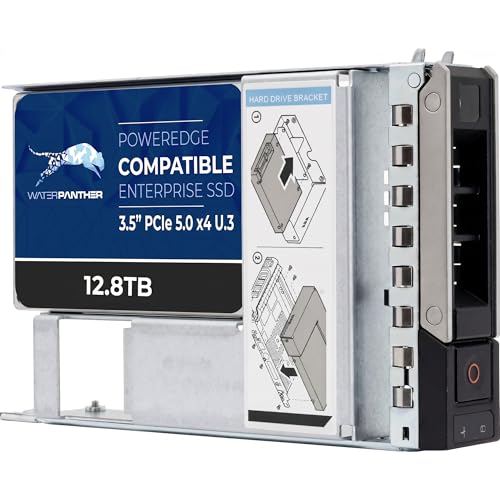
Water Panther 12.8TB 3D TLC PCIe 5.0 x4 NVMe U.3 Hybrid 3.5" SSD for Dell PowerEdge Servers | Mixed-Use | Enterprise Solid State Drive in 16G Tray Compatible with 1VGG0 R760 R6615
12.8TB PCIe 5.0 x4 NVMe U.3 Enterprise SSD — Next-generation PCIe 5.0 interface delivers up to 12,000 MB/s…
As an affiliate, we earn on qualifying purchases.
As an affiliate, we earn on qualifying purchases.
Evolution of Sovereign AI Strategies and Market Dynamics
For two years, the dominant advice for sovereignty was to self-host, balancing control against performance. However, recent model advancements, such as GLM-5.2, challenge this paradigm by offering open models that perform comparably to proprietary options in many tasks. Meanwhile, the cost structure of self-hosting has become increasingly unfavorable due to rising GPU prices, operational overhead, and underutilization issues. The market has seen a shift from a capability-centric view to one emphasizing economics and operational practicality.
“Forge is designed to provide managed sovereignty, with a focus on compliance and control, but it is priced against open-weight models and self-hosting costs.”
— Mistral spokesperson
cloud GPU rental service
As an affiliate, we earn on qualifying purchases.
As an affiliate, we earn on qualifying purchases.
Unresolved Questions About Long-Term Cost Trends and Model Capabilities
It remains unclear whether the cost advantages of managed solutions will persist as hardware prices fluctuate and as open models continue to improve. Additionally, the long-term performance gap between open and proprietary models in specialized tasks, such as autonomous software engineering, still favors the latter, and the pace of these differences narrowing is uncertain.

Local LLM Inference Optimization: A Comprehensive Guide to Quantization, Hardware Acceleration, and Efficient Private AI Deployment
As an affiliate, we earn on qualifying purchases.
As an affiliate, we earn on qualifying purchases.
Future Developments in Sovereign AI Cost-Effectiveness and Capabilities
Organizations will likely reassess their sovereignty strategies, weighing operational costs against control benefits. Further model improvements, hardware price fluctuations, and evolving cloud pricing models will influence the economics of self-hosting versus buying. Industry players may also introduce new solutions that alter the current cost dynamics, making ongoing analysis essential.
Key Questions
Is self-hosting still a viable option for sovereign AI?
Self-hosting remains viable for organizations with high utilization, specialized needs, or existing infrastructure, but for most, it is more expensive than managed solutions.
How do recent open models compare to proprietary models in performance?
Open models like GLM-5.2 now perform competitively on many enterprise tasks, narrowing the capability gap, but proprietary models still lead in ultra-long-horizon and highly autonomous applications.
What are the main cost components of self-hosting sovereign AI?
The primary costs include GPU hardware, operational staffing, idle hardware penalties, and cloud or on-premise infrastructure expenses, which often outweigh the cost of API-based solutions.
Will hardware costs continue to rise or fall?
Hardware prices for GPUs have risen by about 14% annually in 2026, driven by demand recovery, but future trends depend on supply chain developments and technological advances.
What should organizations consider when choosing between self-hosting and buying?
Organizations should evaluate their workload utilization, operational capacity, cost sensitivity, and long-term strategic goals, rather than relying solely on capability assumptions.
Source: ThorstenMeyerAI.com